
Regatta Park Shortlisted for LAA and AILA Awards
Video Credit: Glascott
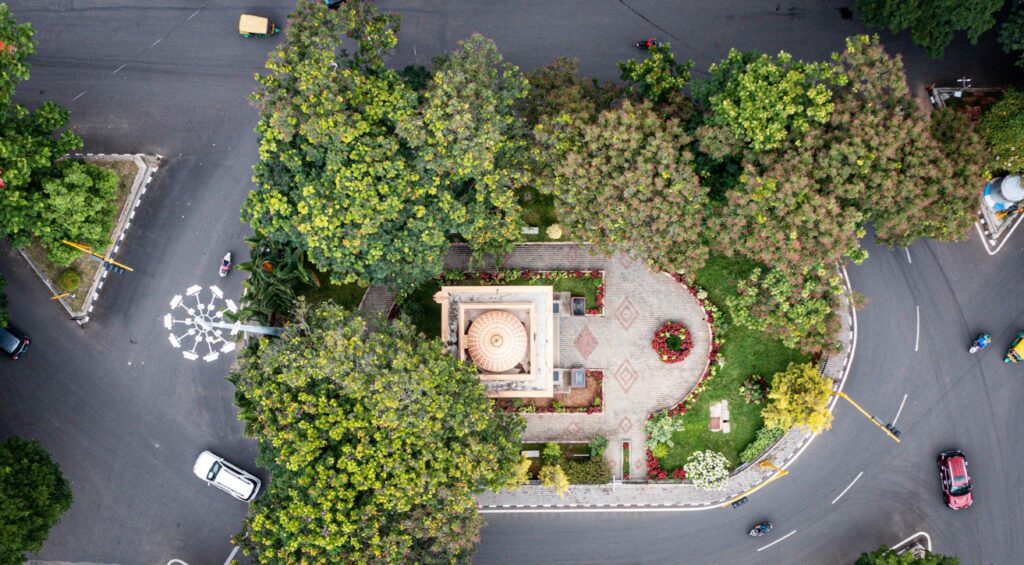
Regatta Park, Penrith has been shortlisted for both the Landscape Australia Awards (LAA) Public Domain category and the Australian Institute of Landscape Architects (AILA) Parks and Open Space category, recognising the park’s transformation of Western Sydney’s relationship with the Nepean River.
The project, delivered by Penrith City Council with master-planning by Clouston and detailed design by McGregor Coxall, realigned a major road that had bisected the foreshore for decades. The 66,000m2 parkland now provides continuous public access to the river, integrating ecological restoration, cultural heritage and community recreation.
Regatta Park has become Penrith’s most used public space, with pedestrian and cycling traffic through the precinct increasing 53% since opening. The park supports diverse uses including two cafés, a casual cricket oval, water play, outdoor gym and an inclusive playspace designed using Everyone Can Play principles. Three heritage buildings have been retained and adaptively reused, preserving the site’s layered histories.
The ecological strategy restored 400 metres of riparian corridor, with more than 400 trees planted and over 2,000m2 of invasive bamboo removed. Green infrastructure now intercepts runoff from 7,000m2 of hard surfaces and biologically treats over 5 million litres of stormwater annually before entering the river, a critical habitat for platypus.
Cultural engagement extended from Aboriginal heritage investigations through to collaboration with Darug custodians and local artist Blak Douglas, whose major public artwork weaves cultural storytelling into the arrival experience. The locally responsive planting palette and heritage interpretation reflect the park’s position on Darug and Gundungarra Country.
Shade provision was embedded as a functional requirement, with double rows of canopy trees creating shaded corridors and social gathering spaces designed to remain usable during Western Sydney’s extreme heat months.
The park’s success demonstrates landscape architecture’s capacity to reshape civic life while restoring cultural narratives and regenerating ecological systems within a renewed riverfront landscape.
New images capture the park maturing and in full use by the local community.
Image Credit: Martin Mischkulnig


About the author